“In my opinion, the practice of keeping sows in gestation crates for most of their pregnancy is one of the cruelest forms of confinement devised by humankind.”
Pregnancy cages, often called “gestation crates” or “sow stalls”, are metal enclosures used to confine breeding pigs during pregnancy. These cages are so small that the sow cannot turn around and has only enough space to stand up or lie down.
Despite widespread scientific concern and strong public opposition, pregnancy cages remain common in many of the world’s largest pig-producing countries. Their continued use represents one of the most severe and long-term forms of confinement in animal farming.
What Are Pregnancy Cages?
Pregnancy cages are narrow metal stalls, typically around two metres long and less than one metre wide. Breeding pigs are confined inside them for all or part of their 115-day pregnancy.
In many countries, including China, the United States, and several major pig-producing nations in Latin America and Asia, sows are generally confined in these cages for their entire pregnancy. In the European Union, the use of pregnancy cages is legally permitted for the first four weeks after insemination. A small number of countries, including the United Kingdom, Sweden, Norway, and Switzerland, have banned pregnancy cages entirely.
Where pregnancy cages are legal, they are usually the default system for breeding pigs in intensive indoor pig farming.
Life Inside a Pregnancy Cage
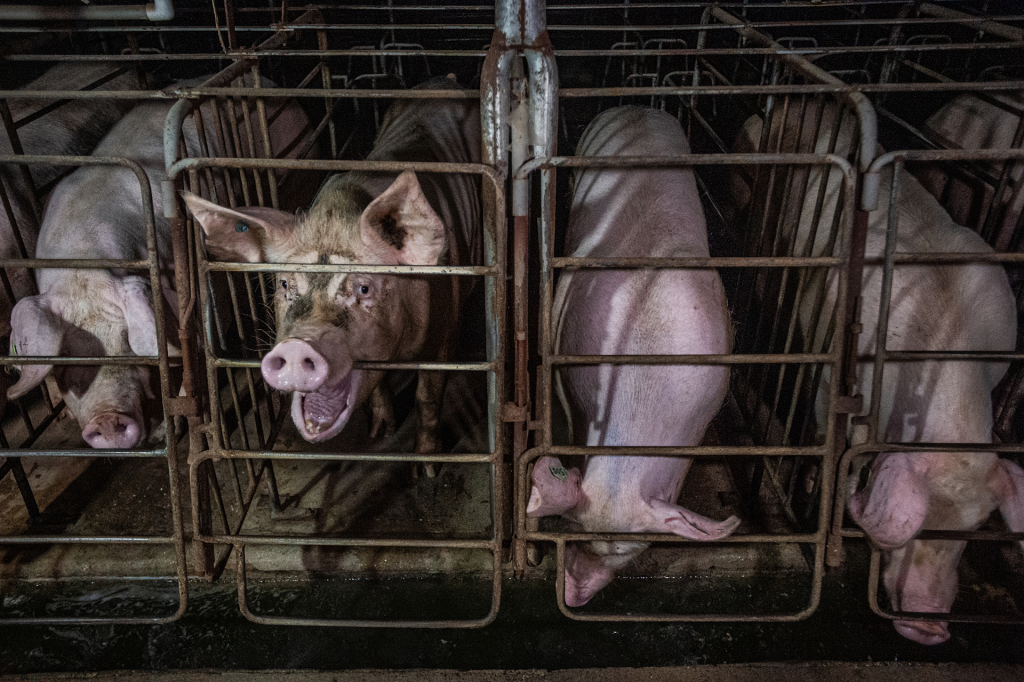
A sow kept in a pregnancy cage cannot turn around, walk, explore, or interact normally with other pigs. She spends weeks or months standing or lying on hard floors, often on concrete or slats.
This level of confinement prevents pigs from expressing even the most basic natural behaviours. Pigs are highly motivated to explore their environment, root in substrates, and form social relationships. Pregnancy cages deny all of these needs.
Many sows show signs of severe stress and frustration, including repetitive behaviours such as bar biting, sham chewing, and head weaving. These behaviours are widely recognised indicators of poor welfare.
Physical Health Impacts
Long-term confinement in pregnancy cages is associated with a range of physical health problems. Restricted movement contributes to muscle loss, weakened bones, joint problems, and lameness. Prolonged contact with hard floors can cause painful pressure sores and skin lesions.
Caged sows also face increased risks of urinary tract infections, injuries, and poor cardiovascular health. Limited movement reduces circulation and can worsen existing health conditions.
These harms are not incidental. They are a direct consequence of systems designed around severe confinement rather than protecting the welfare of pigs.
Psychological Stress and Behavioural Deprivation
Pregnancy cages cause pigs profound psychological stress as well as serious physical harm.
Pigs are intelligent, social animals with complex behavioural needs. Preventing movement, exploration, and social interaction for extended periods leads to frustration and behavioural pathology. The repetitive behaviours commonly observed in caged sows reflect chronic stress rather than short-term discomfort.
From an animal welfare perspective, pregnancy cages demonstrably fail to meet the most basic standards for acceptable living conditions.
Global Use and Public Opposition
Pregnancy cages remain widespread across much of the world. In China, which produces roughly half of the world’s pork, there is no national legislation protecting farmed pigs, and cage systems dominate breeding operations. In the United States, pregnancy cages are still used across most major pork-producing states, despite bans in a small number of jurisdictions.
In contrast, countries that have banned pregnancy cages demonstrate that alternatives are both feasible and productive. Group housing systems with bedding and enrichment are now well established in nations that have phased out cages.
Public opposition to pregnancy cages is consistently high. Surveys across Europe and North America show strong support for banning the confinement of pregnant pigs. The European “End the Cage Age” initiative collected over one million signatures calling for an end to cages across farmed species, including pigs.
The Cycle of Confinement
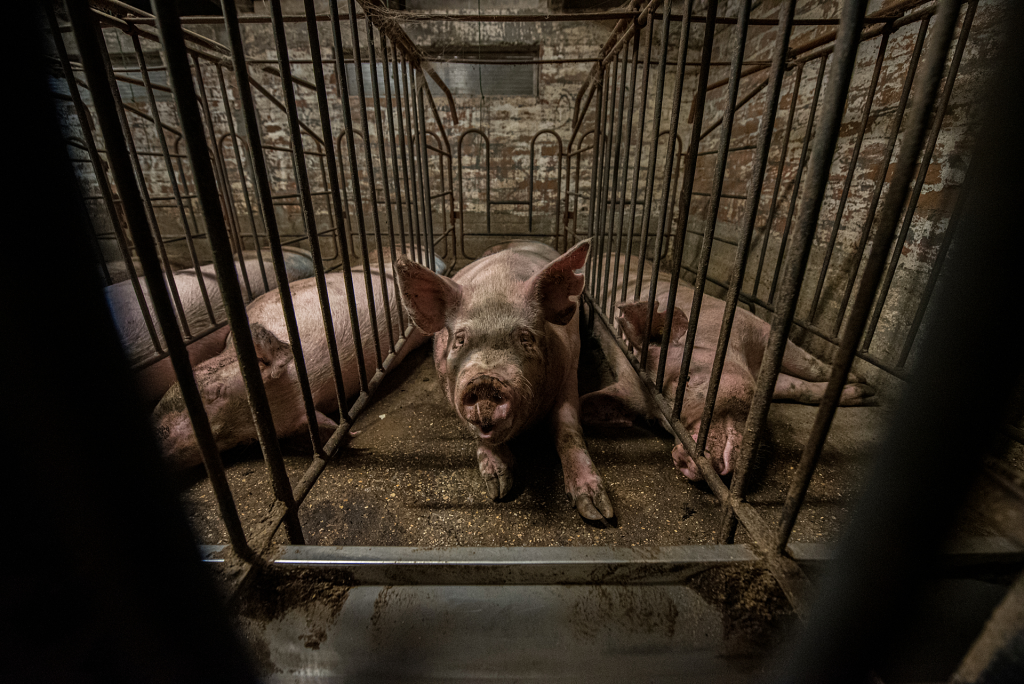
For almost all breeding pigs, confinement is sadly not a one-off experience. Sows are repeatedly inseminated, confined in a pregnancy cage, moved to a farrowing crate to give birth, and then returned to a cage for the next pregnancy.
This cycle can continue for several years. Much of a breeding pig’s adult life may be spent unable to turn around or express natural behaviour. Understanding this cycle is essential to understanding the scale and severity of suffering cage-based systems cause to breeding pigs.
Summary
Pregnancy cages are one of the most restrictive and harmful confinement systems used in modern farming. They prevent basic movement, deny natural behaviour, and cause both physical injury and severe psychological distress.
Countries that have banned pregnancy cages clearly demonstrate that more humane alternatives are possible. Ending the use of pregnancy cages is a necessary step towards farming systems that respect breeding pigs as sentient animals rather than simply economic units of production.