“Transformation to healthy diets by 2050 will require substantial dietary shifts, including a greater than 50% reduction in global consumption of unhealthy foods such as red meat…”
Today’s intensive pig production is driving multiple, interconnected public health, environmental, and animal welfare crises. A growing scientific consensus now recognises that current levels of meat production and consumption are incompatible with protecting human health, safeguarding the environment, and preventing widespread animal suffering.
For Pigs Protection, meat reduction is a science-based public-interest response to the scale of harm caused by current levels of pork production and consumption. Reducing demand for pork directly reduces the number of pigs bred, confined, mutilated, and killed, while also delivering major benefits for public health and the planet.
Pork is the most widely consumed meat globally. As a result, pork production plays a particularly significant role in driving greenhouse gas emissions, deforestation, biodiversity loss, water pollution, antimicrobial resistance, and diet-related disease. Addressing these problems requires not only improving how pigs are farmed, but also reducing how many pigs are farmed.
Why Meat Reduction Is Necessary
High levels of meat consumption are associated with a wide range of harms:
- Increased risk of cancer and other chronic diseases
- Rising antimicrobial resistance linked to intensive livestock systems
- Greenhouse gas emissions and climate change
- Deforestation and biodiversity loss driven by soy and cereal crops grown to feed pigs
- Large-scale systems that subject pigs to confinement, mutilations, and inhumane deaths
Scientific bodies now conclude that efficiency improvements alone cannot solve these problems. Even with technological advances, the scale of animal agriculture remains too large. Substantial reductions in meat consumption are required.
Independent Scientific Consensus on Meat Reduction
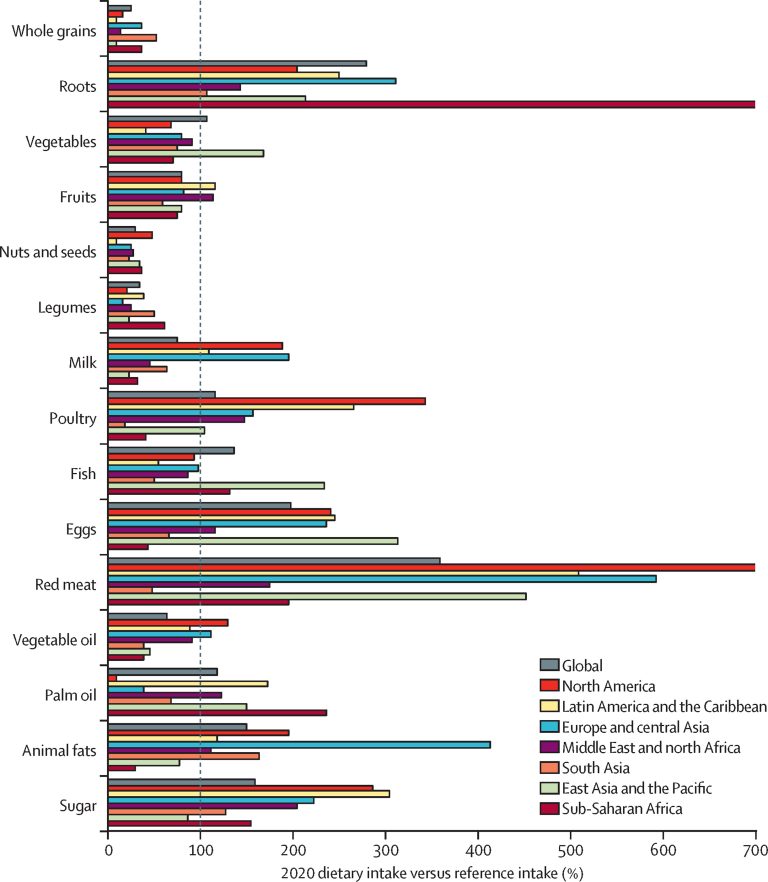
Independent expert bodies increasingly recommend substantial reductions in red and processed meat consumption as part of protecting human and planetary health.
The EAT-Lancet Commission’s Planetary Health Diet calls for global reductions of around 50 percent in red meat consumption by mid-century in order to stay within environmental limits and improve population health. These recommendations include pork and processed pork.
The EAT-Lancet Commission also emphasises that diets high in animal products contribute to global food inequity, because vast quantities of edible crops are diverted to animal feed rather than used directly for human nutrition, increasing pressure on land and food prices.
The United Nations Environment Programme and other international bodies emphasise that transforming food systems is essential to halt biodiversity loss, reduce greenhouse gas emissions, and build resilient food supplies.
Shifting towards diets centred on plant-based foods, with far lower overall meat consumption, is a necessary part of addressing climate change, environmental degradation, and public health harms.
Meat Reduction and Public Health
High consumption of pork, particularly processed pork, is associated with serious health risks. Processed pork products such as bacon, ham, and sausages are classified by the World Health Organization as Group 1 carcinogens. Unprocessed pork, as a red meat, is classified as a probable carcinogen.
Intensive pig farming also relies heavily on antibiotics, contributing to the global crisis of antimicrobial resistance. This threatens the effectiveness of life-saving medicines used in routine medical care, surgery, and the treatment of serious infections.
Reducing pork consumption:
- Lowers exposure to cancer-causing foods
- Helps reduce antimicrobial use in farming
- Supports healthier population-level dietary patterns
From a public health perspective, meat reduction is a preventive strategy that can reduce disease burden while easing pressure on healthcare systems.
“Because intake of red meat is not essential and appears to be linearly related to higher total mortality… the optimal intake may be zero.”
Meat Reduction and Pig Welfare
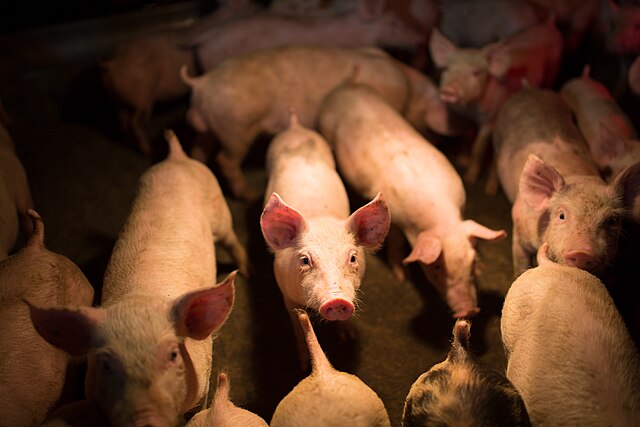
Current levels of pork production depend on systems that confine pigs in cages, subject piglets to painful mutilations, and kill pigs using inhumane stunning methods. These practices are not marginal. They are structural features of large-scale industrial pig farming.
Reducing pork production directly reduces the number of pigs brought into these systems. It also makes it easier to phase out cages, routine mutilations, and extreme confinement, because farming no longer has to operate at such intense scale.
It is fundamental to recognise that protecting pigs requires addressing not only how pigs are farmed, but how many pigs are farmed.
Pigs Protection Position
Pigs Protection supports substantial, science-based reductions in pork production and consumption as part of a broader transition towards food systems that protect pigs, safeguard public health, and respect environmental limits.
We also maintain that pigs who continue to be farmed must not be subjected to cages, routine mutilations, or inhumane slaughter. Meat reduction and strong welfare protections are complementary, not competing, approaches.
Reducing pork consumption is one of the most effective ways individuals and societies can:
- Reduce pig suffering
- Lower disease risk
- Cut greenhouse gas emissions
- Protect ecosystems
Learn more about pig welfare →
Learn more about pig farming and public health →
Learn more about pig farming and the environment →