“To lower your cancer risk, we recommend eating little, if any, processed meat.”
A large and growing body of scientific evidence shows that both processed pork and unprocessed pork are linked to increased cancer risk in humans. These findings raise serious public health and consumer protection concerns, particularly given how widely pork products are consumed in many countries.
Understanding the cancer risks associated with pork is essential for informed decision-making by individuals, health professionals, and policymakers.
Pork Consumption and Cancer Risk
Pork is one of the most widely consumed meats globally and appears in diets in many different forms. Scientific bodies now distinguish between cancer risks associated with processed pork products and those associated with unprocessed pork as a form of red meat. Both are linked to increased cancer risk, but processed pork carries the strongest level of evidence.
Processed Pork and Cancer
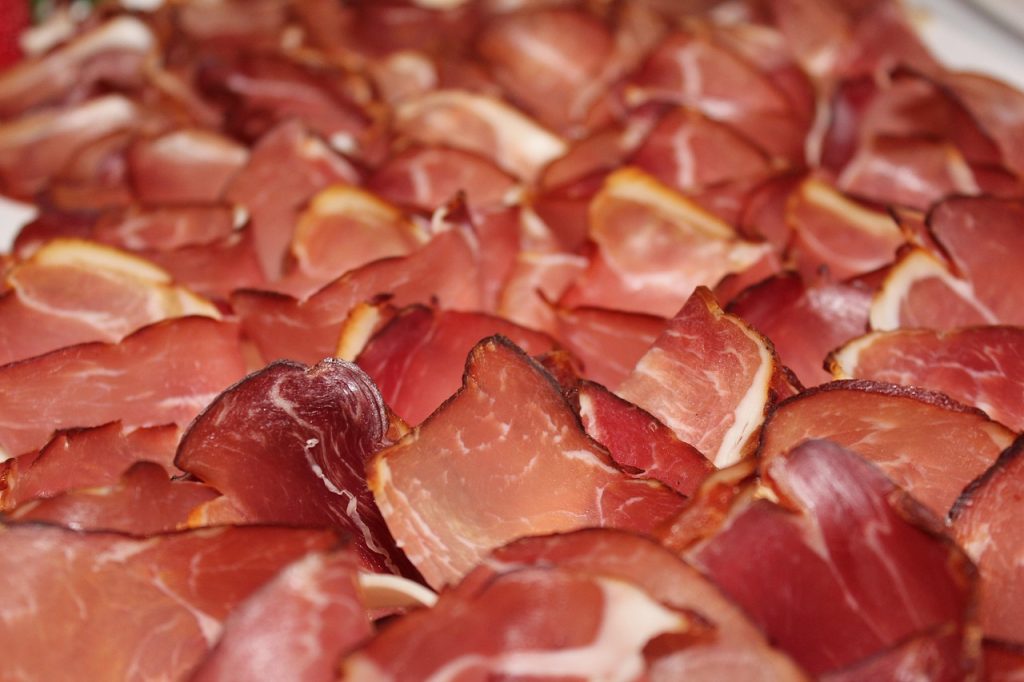
Processed pork products such as bacon, ham, sausages and cured meats are classified by the World Health Organization’s International Agency for Research on Cancer (IARC) as Group 1 carcinogens, meaning there is strong evidence that they cause cancer in humans.
This places processed pork in the same evidence category as tobacco smoke and asbestos. While this does not mean the level of risk is identical, it does mean the scientific certainty about cancer risk is comparable.
Large population studies consistently link processed meat consumption to increased risk of colorectal cancer, and also to cancers of the stomach and pancreas.
The World Cancer Research Fund advises people to eat very little, if any, processed meat.
Unprocessed Pork and Cancer
Unprocessed pork (fresh pork cuts that have not been cured, smoked, or chemically preserved) is classified as Group 2A – probably carcinogenic to humans.
Red meat refers to mammalian muscle meat, including pork, beef and lamb. This classification reflects strong evidence from animal studies and substantial evidence from human studies linking red meat consumption to cancer, particularly colorectal cancer.
The World Cancer Research Fund recommends limiting red meat intake to no more than about three portions per week.
How Pork Consumption Increases Cancer Risk
Several biological mechanisms help explain why pork and processed pork increase cancer risk:
- Nitrites and nitrates used in curing can form carcinogenic N-nitroso compounds
- Heme iron in red meat can promote DNA damage
- High-temperature cooking (frying, grilling) produces carcinogenic compounds such as heterocyclic amines and polycyclic aromatic hydrocarbons
These mechanisms reinforce that the cancer risk is biologically plausible, not just statistical.
Public Health Guidance
Health authorities increasingly advise reducing consumption of red and processed meat.
In the UK, the NHS recommends eating no more than 70 grams per day of red and processed meat and advises that cutting down on these foods can reduce bowel cancer risk.
Internationally, cancer prevention organisations such as the World Cancer Research Fund consistently recommend eating little, if any, processed meat and limiting red meat intake.
Evidence reviewed by the International Agency for Research on Cancer indicates that each 50g of processed meat consumed daily is associated with an increased risk of colorectal cancer of around 18%.
Pig Protection’s Position
Pig Protection considers the cancer risk associated with pork consumption to be a major public health and consumer protection issue.
We support:
- Consumers abstain from processed pork
- Substantial reduction in pork consumption
- Clear front-of-pack labelling stating that processed pork is a carcinogen and unprocessed pork is a probable carcinogen
Reducing pork consumption benefits pigs, protects public health, and supports a more sustainable food system.