“The world is heading towards a post-antibiotic era in which common infections will once again kill.”
Antimicrobial resistance (AMR) is widely recognised as one of the greatest global threats to human health in the twenty-first century. When bacteria become resistant to antibiotics, infections that were once easily treatable become difficult or impossible to cure. This undermines modern medicine and places lives at risk.
The way animals are farmed plays a major role in this crisis. Globally, over 70% of all antibiotics by volume are used in farmed animals. Pigs, which are typically reared in intensive systems and often treated as groups rather than as individuals, account for a substantial share of this use. Antibiotic use in pig production therefore has important implications not only for pig health and welfare, but also for the effectiveness of antibiotics in human medicine.
Together, these realities mean that intensive pig production contributes to a public-health problem that extends far beyond the farm, affecting human healthcare, communities, and future generations.
Why Antibiotics Are Widely Used in Pig Farming
High levels of antibiotic use in pig production are closely linked to the way pigs are housed and managed.
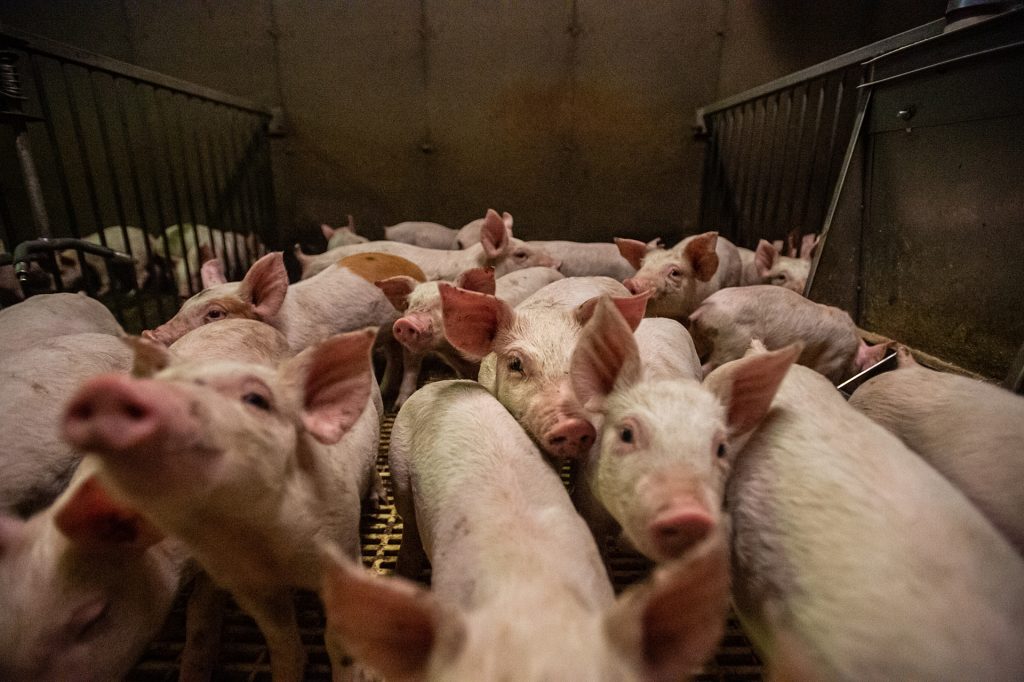
In many countries, pigs are kept in large numbers indoors, often on slatted or concrete floors, at high stocking densities, and with limited environmental enrichment. Piglets are typically weaned abruptly at three to four weeks of age, far earlier than would occur in natural conditions. Early weaning, mixing of unfamiliar pigs, overcrowding, and poor air quality all create stress and weaken immune function.
These conditions increase the risk of common infectious diseases, particularly diarrhoea after weaning and respiratory disease in growing pigs. To manage these predictable disease pressures, antibiotics are frequently administered to entire groups of pigs via feed or drinking water rather than targeted to individual sick animals.
This group-based approach exposes large numbers of healthy animals to antibiotics, creating ideal conditions for the emergence and spread of resistant bacteria.
The Scale of Antimicrobial Use in Pigs
Globally, antimicrobial use in food-producing animals is large and, in many regions, still increasing. Pigs and poultry are consistently identified as among the livestock sectors with the highest intensity of antibiotic use, reflecting their intensive production systems and rapid turnover.
In the United Kingdom, the pig sector has made progress in reducing antibiotic use over the past decade. However, pigs still account for a significant proportion of livestock antibiotic consumption, and occasional increases in use have been reported in recent years, highlighting the need for continued vigilance.
In many parts of the world, regulatory controls are weak or poorly enforced. Some countries do not require veterinary prescriptions for antibiotics in farmed animals, and in some regions antibiotics are still used routinely for disease prevention or growth promotion. Data collection is inconsistent, and many countries do not publish pig-specific usage figures.
This uneven regulatory landscape means that global pig production continues to represent a major reservoir of antibiotic exposure.
Antibiotics Used in Pigs and Their Importance for Human Medicine
Several classes of antibiotics used in pig farming are the same as, or closely related to, those used to treat serious infections in humans. These include:
- Tetracyclines
- Penicillins and aminopenicillins
- Macrolides
- Fluoroquinolones
- Third and fourth generation cephalosporins
- Colistin (a last-resort antibiotic in human medicine)
Some of these are classified by the World Health Organization as critically important for human health. Their use in animals increases selective pressure for resistant bacteria that can compromise the effectiveness of these medicines in people.
Although some countries have greatly reduced or eliminated the use of the most critical antibiotics in pigs, this is not universal, and global use remains a concern.
How Resistance Moves from Pigs to People
Antibiotic use in pigs does not remain confined to farms.
Resistant bacteria and resistance genes can spread through multiple pathways:
- Contaminated meat and food products
- Farm workers and people living near farms
- Manure and slurry applied to land
- Water, soil, and wildlife
Bacteria commonly associated with pigs, such as Escherichia coli and Salmonella, can carry resistance genes and can cause infections in humans. These genes can also transfer to other bacteria, further amplifying the problem.
The widely accepted “One Health” approach recognises that human health, pig health, and environmental health are interconnected. Antibiotic use in pigs therefore contributes to the overall burden of antimicrobial resistance affecting people.
Why Antimicrobial Resistance Matters for Everyday Healthcare
Antibiotics are essential not only for treating infections, but for enabling much of modern medicine.
Procedures such as hip replacements, cancer chemotherapy, organ transplants, and caesarean sections all rely on effective antibiotics to prevent and treat infections. When resistance rises, these routine medical interventions become riskier.
People are already dying from drug-resistant infections worldwide. Treatment failures, longer hospital stays, and higher healthcare costs are becoming more common. Without urgent action, these impacts are expected to worsen.
Reducing unnecessary antibiotic use in pig production is therefore a public-health priority.
Pig Welfare, Farming Systems, and Antibiotic Dependence
High antibiotic use is often a symptom of farming systems that place pigs under chronic stress and disease pressure.
Improving pig welfare through:
- Lower stocking densities
- Better ventilation and hygiene
- Later and more gradual weaning
- Environmental enrichment
- Robust breeding and health management
can reduce disease risk and, in turn, reduce the need for antibiotics.
Rather than relying on antibiotics to compensate for poor conditions, healthier and more humane systems can protect both pig welfare and human health.
Reducing Pig Consumption and Protecting Public Health
Antimicrobial resistance is driven in part by the scale of global livestock production. Reducing demand for pig meat can directly reduce the number of pigs farmed and the volume of antibiotics used.
Shifting towards diets with less pork and more plant-based foods offers a powerful opportunity to:
- Protect pigs from intensive confinement
- Reduce antibiotic use in agriculture
- Safeguard the effectiveness of antibiotics for future generations
Addressing antimicrobial resistance therefore aligns with Pigs Protection’s core mission to promote pig welfare, protect public health, and support a more sustainable food system.