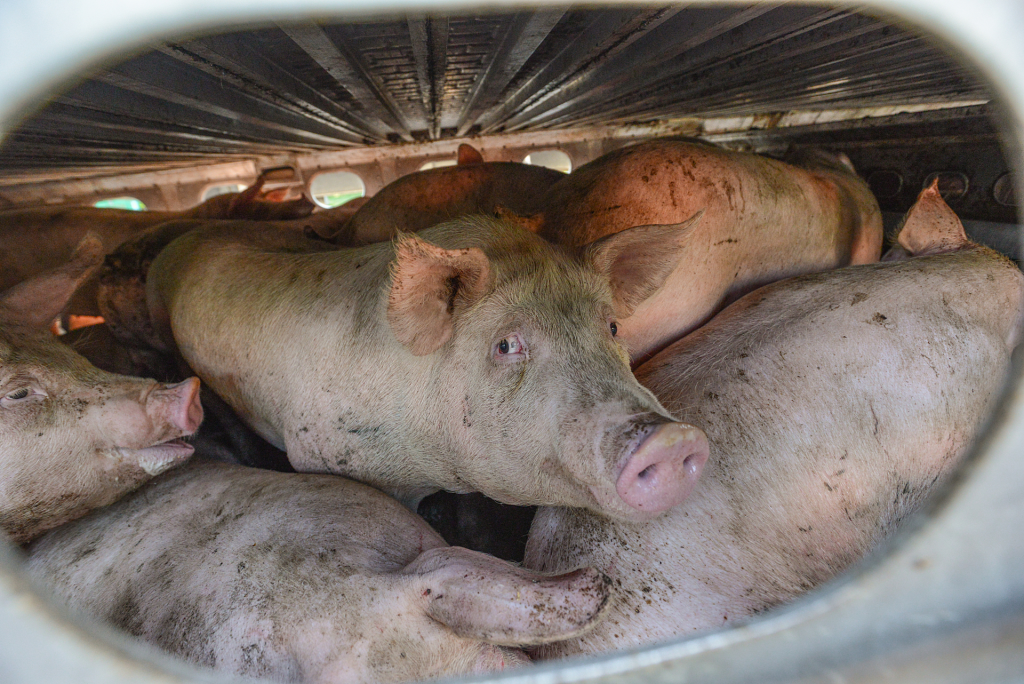
““An animal should at least have sufficient freedom of movement to be able without difficulty to turn around, groom itself, get up, lie down and stretch its limbs.”
Pigs are highly sentient, intelligent, and social animals. Yet across much of the world, they are confined in intensive systems that routinely restrict movement, prevent natural behaviour, and cause avoidable suffering. This overview outlines the major welfare issues faced by pigs from pregnancy through to slaughter.
Breeding Pigs: Pregnancy and Farrowing Cages
Breeding pigs (sows) are routinely confined in cages so small that they cannot turn around. After insemination, many countries allow the use of pregnancy cages (industry terms: “gestation crates”, “sow stalls”) for all 115 days of gestation.
Pregnancy cages remain widespread across most major pig-producing countries, including China, the United States, Brazil, and Vietnam. Others, including the EU, restrict their use to the first 28 days. Nations such as the UK, Sweden, Norway and Switzerland have banned pregnancy cages entirely, demonstrating that cage-free systems are both viable and preferable.
One week before birth, sows are moved into farrowing cages, which again prevent turning and severely restrict movement. These cages are used widely in the United States, Europe, China and other large pig producing nations. Even the UK, often considered a world leader in animal welfare, permits farrowing cages, which are the dominant system for indoor breeding pigs.
Sweden and Norway have prohibited farrowing cages, showing that alternative systems are possible and productive. The repeated cycle of cage confinement has profound physical and psychological impacts on breeding pigs.
Piglets: Amputations and Early-Life Stress
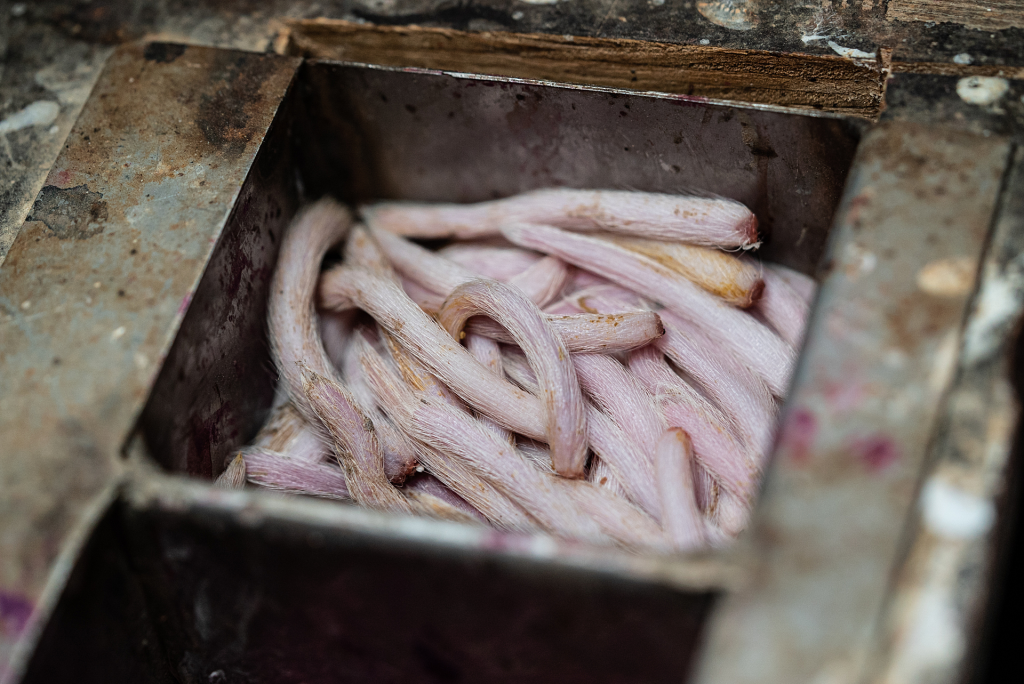
Piglets are generally born into the barren environment of farrowing cages. Within days, most undergo painful procedures including castration, tail amputation, and teeth grinding, almost always without anaesthesia or analgesia.
These interventions are used to control issues that arise in intensive systems, such as abnormal aggression and production-related meat quality concerns, rather than to improve piglet welfare.
Growing Pigs: Cramped Housing and Disease
After weaning at three to four weeks of age, most piglets are reared indoors in crowded, often barren environments. In many countries they spend their entire lives on slatted floors without bedding or enrichment. Even where manipulable materials such as straw are legally required, the quantity and quality provided are often inadequate.
High stocking densities, stress, and poor hygiene contribute to diseases including diarrhoea and pneumonia. The global persistence of routine tail amputation, carried out to reduce tail biting, demonstrates that many systems fail to meet even the pigs’ basic behavioural needs.
Slaughter: Inhumane Stunning Methods
Most pigs are stunned with carbon dioxide gas or by electrocution. Carbon dioxide causes severe distress for up to 30–60 seconds before loss of consciousness. Electrocution requires individual restraint, which is stressful and often poorly managed.
These methods result in millions of pigs experiencing avoidable suffering at the point of slaughter. As a result, a large proportion of the approximately 1.5 billion pigs slaughtered each year are killed in ways that cause serious suffering.