“The vast majority of pigs are routinely mutilated (tail docked, tooth clipped, castrated, or nose rung) to fit inappropriate systems.”
Across much of the world, piglets are subjected to painful physical mutilations within the first days of life. The most common procedures are tail amputation, castration, and teeth grinding. These are generally carried out without anaesthesia or pain relief, causing significant pain and distress. Importantly, these procedures are used to manage problems created by intensive farming systems, including overcrowding, barren environments, and production systems that prioritise efficiency and product characteristics over welfare.
Why Piglet Mutilations Are Used
Piglet mutilations are commonly justified as necessary management tools. In practice, they are responses to predictable welfare problems created by housing and husbandry systems.
Tail amputation is used to reduce tail biting, an abnormal behaviour that arises largely when pigs are kept in environments that do not meet their behavioural needs. Castration is used to reduce the risk of boar taint, an unpleasant odour or flavour that can occur in meat from a small number of intact male pigs. Teeth grinding is used to reduce injuries to littermates or to the sow during suckling.
Rather than redesigning systems to prevent these problems, globally the pork industry has normalised the removal of body parts from piglets prior to weaning.
Tail Amputation (Tail Docking)
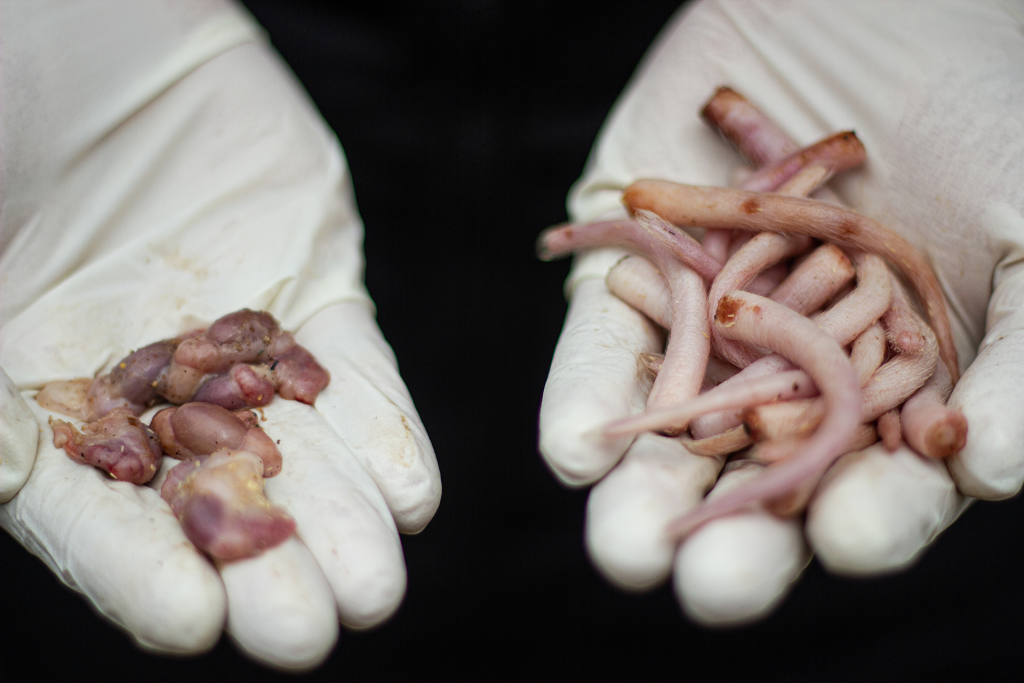
Tail amputation involves surgically removing part of a piglet’s tail, usually within the first week of life. The procedure causes immediate pain and stress and may result in long-term sensitivity or chronic pain due to nerve damage.
In the European Union and the UK, routine tail docking is illegal. The law requires that environmental and management factors contributing to tail biting, such as stocking density, enrichment, and air quality, are addressed first. Despite this, tail amputation remains widespread. In the UK, an estimated 80 percent of pigs continue to have their tails amputated, with similarly high levels across the EU and many other major pig-producing countries.
This continued reliance on tail docking demonstrates that the procedure functions as a substitute for meaningful welfare reform, rather than a genuine last resort.
Castration
Castration generally involves the surgical removal of a male piglet’s testicles, most often without pain relief. The primary purpose of castration is to reduce the risk of boar taint. Boar taint refers to an unpleasant odour or flavour that can occur in meat from some uncastrated male pigs.
Surgical castration causes acute pain and stress and may have lasting welfare consequences. Other methods, such as immunocastration, exist but remain limited in uptake in most pig-producing countries. In the European Union, a voluntary industry commitment aimed to phase out painful surgical castration by 2018, but progress has been slow. In many countries, the majority of male piglets continue to be castrated with inadequate or no pain relief.
In the UK, castration is not routinely practised because pigs are typically slaughtered before sexual maturity. This demonstrates that alternatives to castration exist and that the procedure is not necessary to produce pork.
Teeth Grinding (Teeth Clipping)
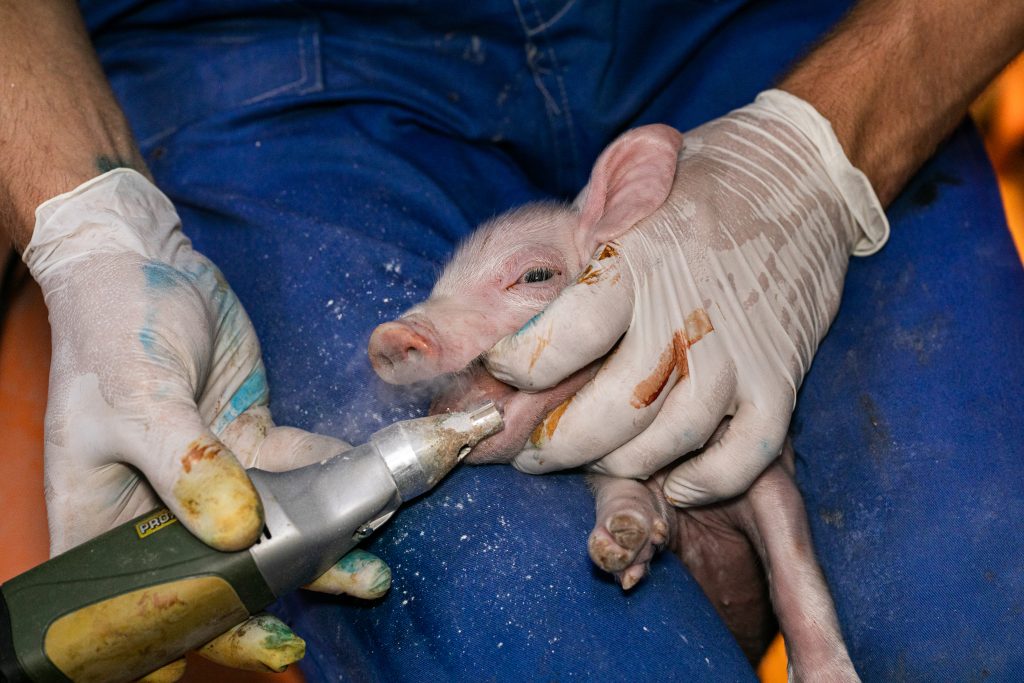
Teeth grinding involves shortening or removing the sharp tips of piglets’ teeth during the first days of life. The procedure is intended to reduce injuries during suckling but causes immediate pain and can lead to infections or long-term discomfort if performed poorly.
In the UK, teeth reduction must not be routine and should only be used as a last resort after other measures fail. Improvements in management, e.g. environment, litter size, sow management, are the appropriate way to address the underlying problems.
A Global Welfare Issue
Piglet mutilations are not confined to any single country or region. They are common across Europe, North America, Asia, and other major pig-producing regions. Their global prevalence reflects the widespread use of intensive systems that prioritise efficiency and output over pig welfare.
The routine use of painful procedures on very young animals raises serious ethical concerns and undermines the claim that modern pork production meets the welfare needs of pigs.
Why Mutilations Are Not the Solution
Mutilations address symptoms rather than causes. The European Food Safety Authority has stated that behaviours such as tail biting and aggression are indicators of environments that fail to meet pigs’ behavioural needs.
Improving pig welfare requires changes to systems, including:
- meaningful environmental enrichment
- adequate space and appropriate stocking densities
- improved air quality and thermal comfort
- better sow welfare and piglet management
Without these changes, painful procedures continue to be used instead of addressing the real causes of poor welfare.
Summary
Tail amputation, surgical castration, and teeth grinding remain routine practices in pig production across the world. Each procedure causes pain and suffering, and their continued use reflects fundamental problems in modern pig farming.
Protecting pig welfare means moving away from systems that rely on routine mutilation and towards farming practices that allow pigs to grow, interact, and behave naturally without unnecessary suffering.